20,000 Robots a Week: Tesla’s New Production Target for Optimus
Tesla aims to ramp Optimus output to 20,000 units weekly by next year while using a massive internal testing fleet to train the AI.
By Arjun Patel ·
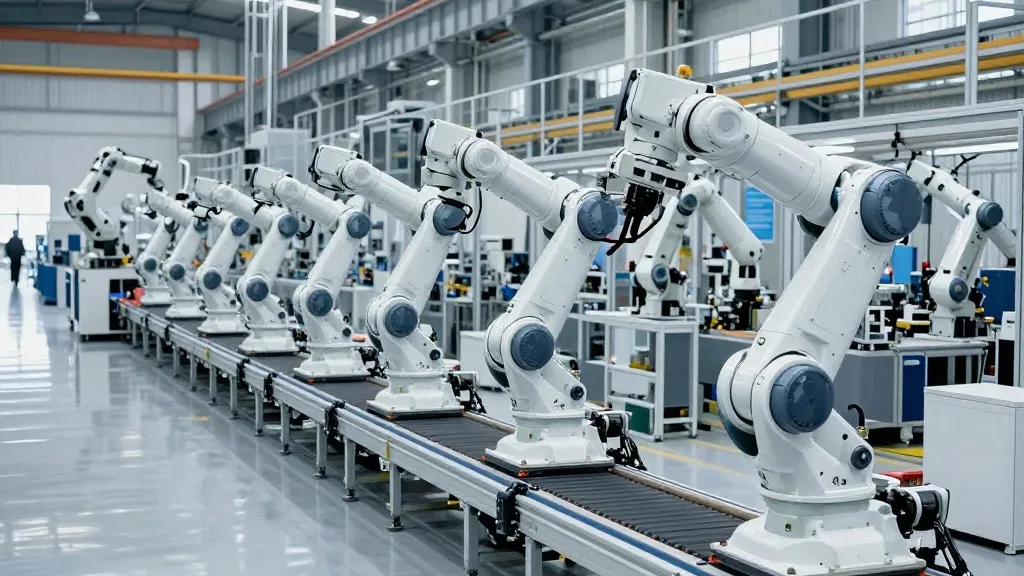
Tesla is targeting a production rate of roughly 20,000 humanoid robots per week as it ramps up manufacturing at its Fremont factory. According to the company’s recent earnings call, the equipment for this high-volume capacity is already in place. This shift marks a significant move from prototype testing to what the company describes as true commercial production, with the goal of meeting the demands of industrial customers.
The production line occupies space in the Fremont plant that previously manufactured Model S and Model X vehicles. Tesla cleared out that old vehicle line in just 46 days to make room for the robot assembly process. The infrastructure is designed to support an annual output of one million units, signaling that the company views this as a long-term, high-volume product rather than a niche experiment.
In its third-quarter shareholder letter, Tesla stated that the units coming off this new line are the first to meet production-quality standards. The company confirmed that the current manufacturing process is suitable for a commercial product. This validation is critical as the firm transitions from building individual prototypes to creating a consistent stream of identical units for sale.
Elon Musk described the growth trajectory of Optimus as an S-curve, noting that the initial phase will have a shallow slope before accelerating. The engineering team is currently focused on refining the robot’s AI, electromechanical design, and overall reliability. Tesla plans to finish this refinement work by the end of next year, at which point it intends to begin delivering robots to outside companies for tasks that are dangerous, repetitive, or require 24/7 operation.
A key challenge for Tesla has been training the AI without a massive fleet of existing units to gather data, unlike its car business. To solve this, the company is creating an Optimus Academy. This internal program will involve 10,000 to 20,000 robots practicing a wide variety of tasks. Every robot produced on the Fremont line will contribute to this training pool, feeding real-world performance data back into the next version of the software model.
Hardware upgrades are also on the horizon. Tesla plans to integrate its AI5 chip into Optimus next year to improve processing capabilities. Musk indicated that a new video demonstrating the robot performing tasks via AI rather than preprogrammed motions should be released within one or two months. He emphasized the need for genuine autonomy, distinguishing it from competitor demos that rely on scripted routines.
The supply chain for the program is also solidifying. In September, Tesla certified Tuopu, Joyson, and Sanhua as mass production partners for various Optimus components. Meanwhile, construction is underway on a much larger dedicated facility at Giga Texas. Drone footage shows the steel frame of that plant nearing completion, with a long-term target of producing 10 million robots annually once fully operational.
Executives noted that production costs for Optimus are trending toward the manufacturing cost target set for the Cybercab. This suggests the robot is being engineered for volume efficiency from the start. However, the robotic hands remain the most difficult design element to finalize. Much of the current engineering effort is focused on solving the complexities of dexterity in these components, a challenge Musk highlighted at a recent industry event.
Source: Teslarati