Lunar Architecture: NASA Revises Artemis Roadmap for 2028 Landing
Space agency officials outlined a new docking strategy for Starship and Orion, aiming to accelerate the return of astronauts to the Moon by eliminating complex orbital maneuvers.
By Kendra Konchanuk ·
NASA has officially detailed a revised architectural approach for its Artemis program, signaling a potential shift in how the agency plans to return human beings to the lunar surface as early as 2028. The update marks the first time the space agency has publicly laid out these specific changes, acknowledging substantial modifications to the mission design that were previously only hinted at in industry reports.
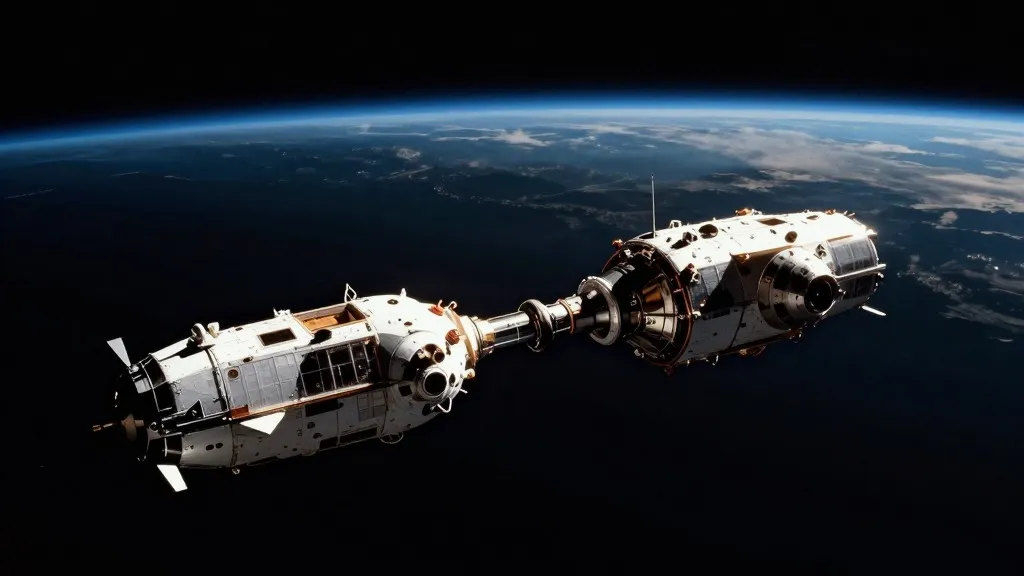
The most significant alteration involves the interaction between SpaceX’s Starship vehicle and NASA’s Orion spacecraft. Under the new plan, Orion will dock with the Starship lunar lander while still in high-Earth orbit. This docking event will occur before the combined vehicles transit to the Moon, a change designed to streamline the mission sequence and reduce complexity in deep space.
For Blue Origin, the mission architecture has also been adjusted to simplify operations. The revised plan calls for four launches of the New Glenn rocket to support the lunar landing. Notably, this configuration removes the requirement for spacecraft-to-spacecraft refueling in orbit. Additionally, the Blue Origin scenario now allows for the possibility of the Blue Moon lander rendezvousing with Orion in low-Lunar orbit, offering a different operational pathway compared to the previous designs.
Despite these architectural shifts, NASA officials stated that the overall timeline remains largely intact. The agency continues to anticipate launching the Artemis III mission by the summer of 2027. This mission is designed as a demonstration, specifically involving docking maneuvers with both the Blue Moon and Starship vehicles near Earth. Following this, the agency is still tracking toward a 2028 launch for Artemis IV, which would mark the actual crewed landing on the lunar surface.
NASA Administrator Jared Isaacman expressed confidence in the agency's ability to meet these targets during the Friday presentation. He emphasized that the current trajectory is realistic given the resources and support available. Isaacman stated, “This is an achievable path we are on right now. We have the mandate, we have the resources, and the support from our stakeholders to be able to execute, and that’s what we intend to do.”
The revisions appear to be a direct response to technical challenges identified by the commercial partners. In meetings held in early 2026, SpaceX engineers highlighted the energy requirements and difficulties associated with docking in a near-rectilinear halo orbit around the Moon. By moving the docking phase to high-Earth orbit, the agency addresses the primary concern raised by SpaceX engineers regarding the efficiency of the previous plan.
This shift in strategy coincides with the agency's decision to cancel the Lunar Gateway project earlier this year. The cancellation effectively resolved the orbital docking issue for SpaceX by eliminating the need to interface with a permanent lunar station. The new approach allows the agency to focus on direct lander capabilities rather than long-term orbital infrastructure.
While the new plan is viewed as a commendable effort to accelerate development, questions remain about the agency's ability to hold these aggressive dates. The leadership team has conducted a thorough review of every element of the Artemis program to ensure the new architecture supports the goals of the lunar lander companies. The next few years will determine if the streamlined operations can translate into timely launches.
The Friday news conference provided a comprehensive overview of these changes, offering clarity on a program that has seen significant evolution in recent months. By acknowledging the substantial changes in the architecture, NASA aims to provide stakeholders and the public with a clear understanding of the path forward. The focus now shifts to execution as the agency prepares for the upcoming demonstration missions.
Source: Ars Technica